Nearly half of Congo’s population is at risk of elephantiasis, a disease that can cause body parts to swell to unnatural sizes, causing not only pain but also embarrassment.
The misfortune of elephantiasis patients
Bafimbo Baudoin used to be confident about his appearance, often wearing nice suits, sunglasses, and colorful hats when walking around his village. However, everything changed three years ago when he began to struggle with elephantiasis. The disease manifested as a bulge in Bafimbo Baudoin’s groin area and he always tried to hide it.
“Sometimes I can’t walk properly because these lumps of flesh keep swelling up and it’s really painful,” the 62-year-old said sadly outside the clinic. Baudoin’s condition is believed to be caused by parasitic worms, which are transmitted to humans through mosquito bites. The parasites usually live in the body’s lymphatic vessels, and multiply over the years. This causes the lymphatic system to become blocked, leading to swelling in parts of the body.
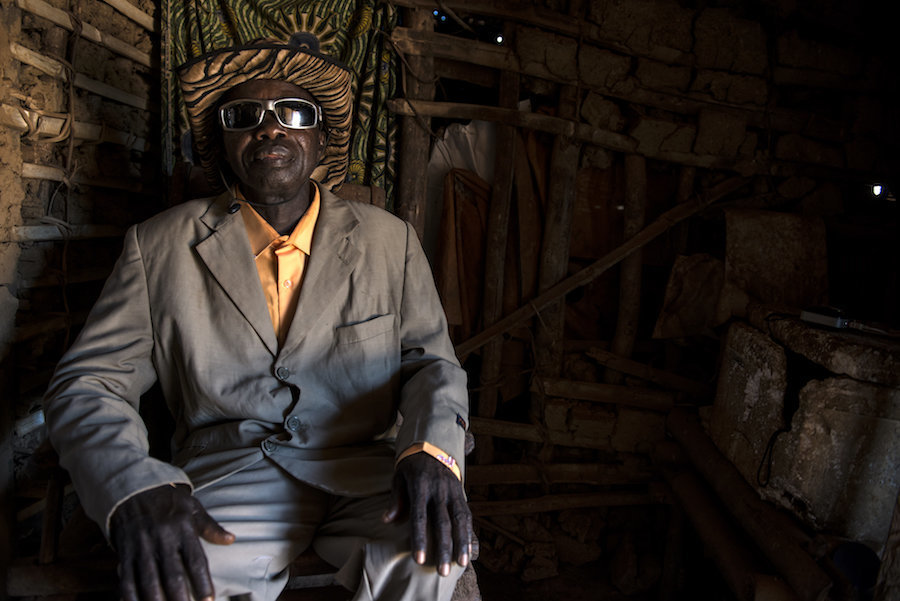
Bafimbo Baudoin, who suffers from elephantiasis, still dresses up to try to make an impression.
More than 1 billion people in 54 countries around the world, especially in tropical regions, are at high risk of elephantiasis. According to the latest figures from the World Health Organization, about 120 million people were infected in 2000.
Testicular swelling, like Baudoin’s, is thought to be a common symptom of the disease. Baudoin is not alone, 25 million people worldwide have similar symptoms, but people pay little attention to this symptom. If not properly cared for and treated, elephantiasis can leave sufferers unable to work, or worse, cause death. It will invisibly isolate them from family and friends. For men, they may be forced to remove their testicles.
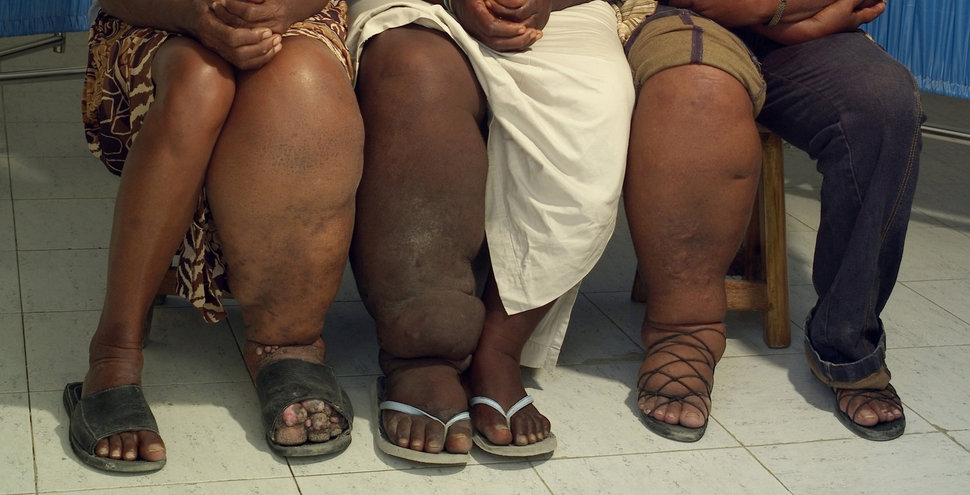
Women in Haiti suffer from swollen feet, a symptom of elephantiasis.
Efforts to control the epidemic
Over the past two decades, many innovative measures have been implemented to monitor and control elephantiasis in many countries around the world. However, in tropical Africa, especially the Democratic Republic of Congo, monitoring for the disease appears to be inadequate. Nearly 40 million Congolese are at risk of elephantiasis, of which only 30% were treated with preventive drugs in 2015. “I don’t think we really know the magnitude of the problem,” said Dr. Belén Pedrique, a tropical medicine specialist.
Even with the availability of treatment and prevention efforts in Congo, the focus is on preventing the spread of the disease, not curing it. Those afflicted with the disease need treatments that can kill the parasitic worms that inhabit their bodies and reduce the swelling in their organs. There is currently no way to reverse the deformities of the patient’s legs and arms.
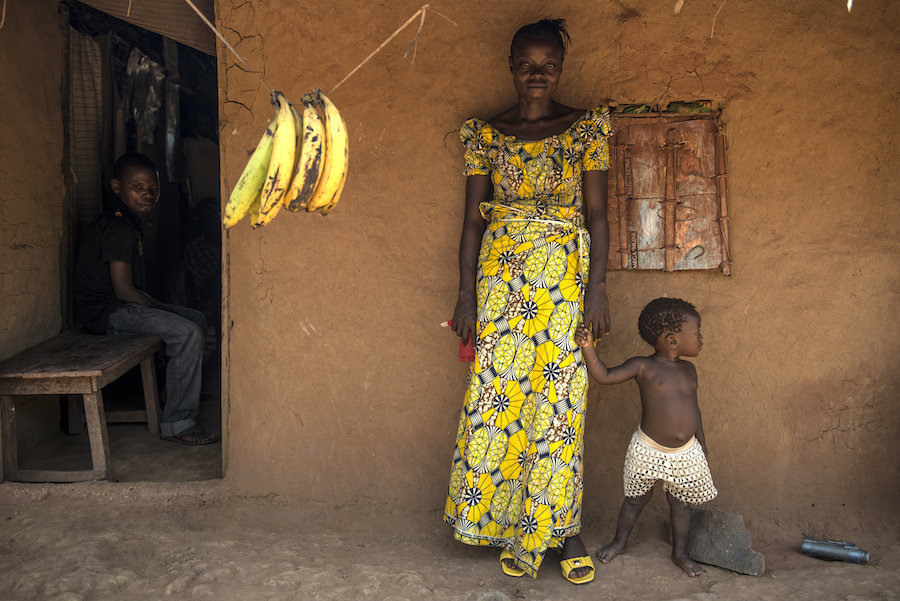
The residents of Uma are standing outside a small clinic in the village.
Baudoin took deworming medication, but it did not kill the parasites in his lymphatic system, but only prevented the formation of new parasites in his blood. It simply prevented the transmission of the disease by mosquitoes. For Baudoin, he had two options: Pay for surgery or not. The swollen area could be surgically removed. Unfortunately, Baudoin did not have $100 to spend on treatment.
People with elephantiasis often lead difficult lives and live in shame. Some cannot leave their homes because of severe swelling. Others even try to avoid the shame by pretending it is a blessing. “The main problem with the disease is the social stigma and the pain and limitations it causes,” says Dr. Pedrique.
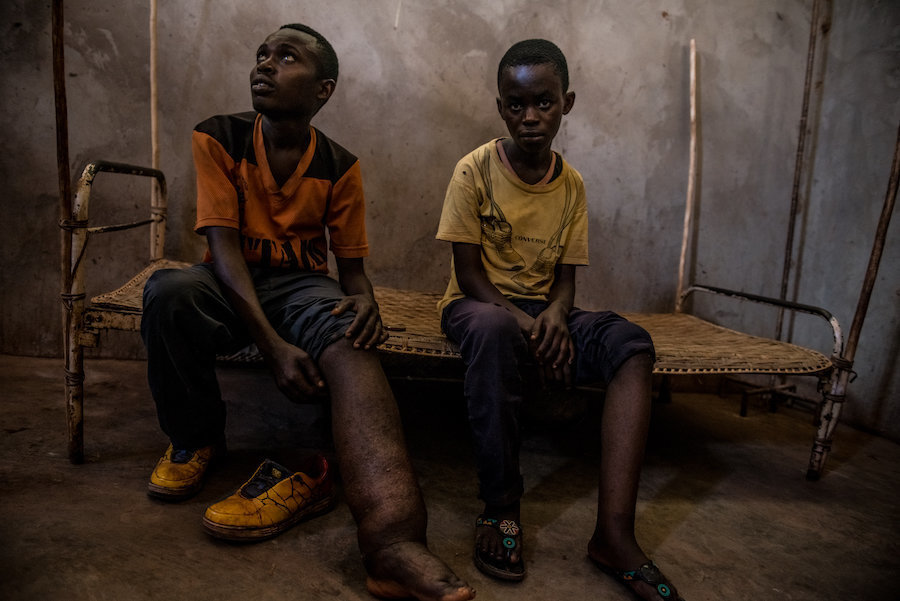
Two patients in Uma suffering from elephantiasis wait for a volunteer team to come to their aid.
In 2000, the World Health Organization (WHO) launched the Global Programme for the Elimination of Lymphatic Helminthiasis, with the help of public health agencies, pharmaceutical companies, and philanthropic donors. High-risk groups are given deworming drugs free or at the lowest possible price once a year for several years. In the Congo, the drugs are given free to the population. Community volunteers go directly into remote areas to help. Another part of the strategy is to prevent the mosquitoes that transmit the disease from biting people, through regular spraying.
While current prevention and treatment methods are still years away from showing significant results, the plan has had some success, with the Pacific island nation of Tonga being the first country to show signs of eradicating elephantiasis.
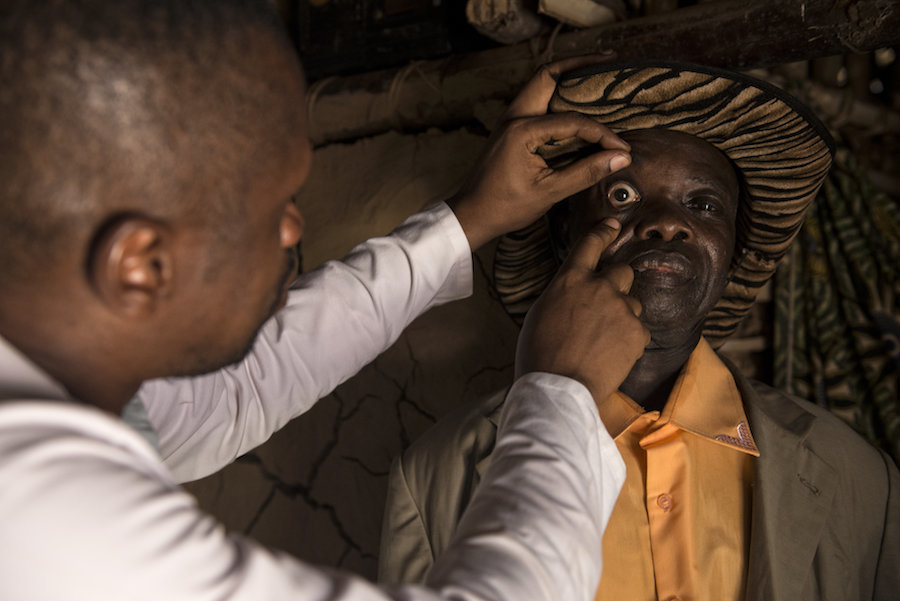
A doctor examines Baudoin to check if he also has eye worms.
But in Congo and nine other Central and West African countries, people also face another infectious disease: Loiasis, the African eye worm. One of the key drugs used to treat elephantiasis can cause brain damage, coma, or death in some people infected with the eye worm. “The epidemiology in Africa is very complex, because you have to check for all the infections at the same time,” Pedrique said.
So it looks like Congo and other countries will have to wait until 2020 to eradicate the disease. In the years to come, new drugs, or combinations of existing drugs in other innovative ways, may become more effective in combating elephantiasis. Experts are now calling for additional international funding to increase the number of mass drug deliveries in Congo and other countries from once a year to twice a year.
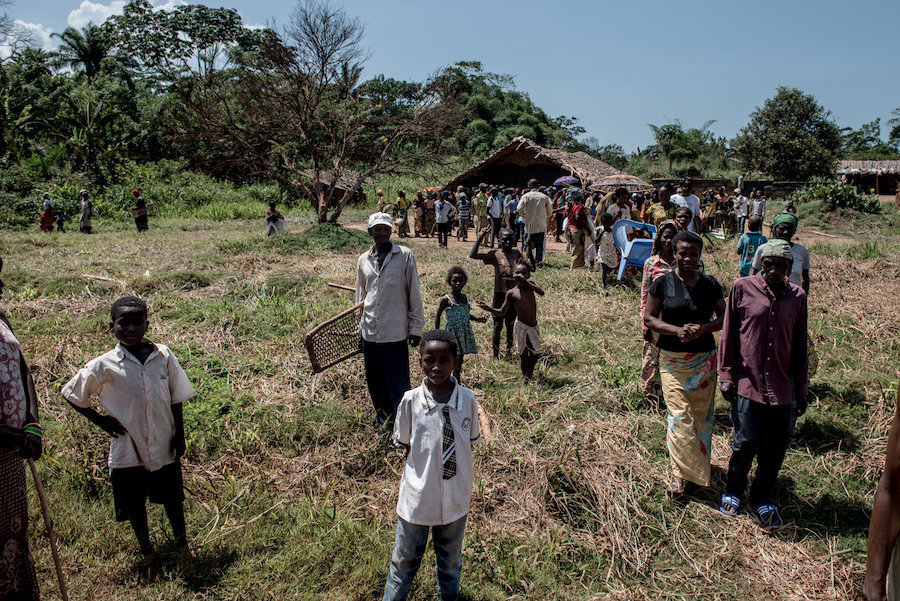
The Uma residents are on their way to see a doctor.
Ultimately, however, this support may not end Bafimbo Baudoin’s suffering. Free surgery for the bulge in his groin is his only hope of salvation. “My wish is to have enough money to see a doctor,” he said. “I feel so much pain and shame.”