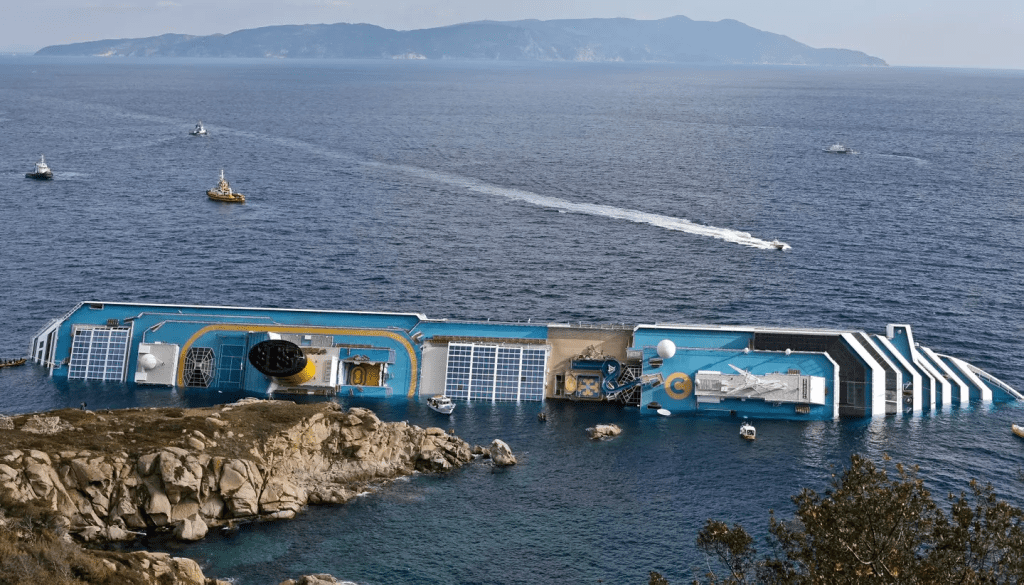
Francesco Schettino, the captain responsible for the deadly Costa Concordia shipwreck, is believed to have caused the crash while attempting to impress a young woman, leading to the tragic loss of 33 lives.
In January 2012, Schettino was in charge of the luxury cruise ship during a Mediterranean voyage. As the ship neared the island of Giglio off Italy’s coast, he decided to steer the vessel dangerously close to shore for a “sail by,” a maritime gesture meant to impress the locals with the ship’s horn. This maneuver, which deviated from the planned course, brought the ship perilously close to a rock formation. Despite Schettino’s eventual attempt to redirect the ship, it collided with the rocks, tearing a 35-meter gash in the side.
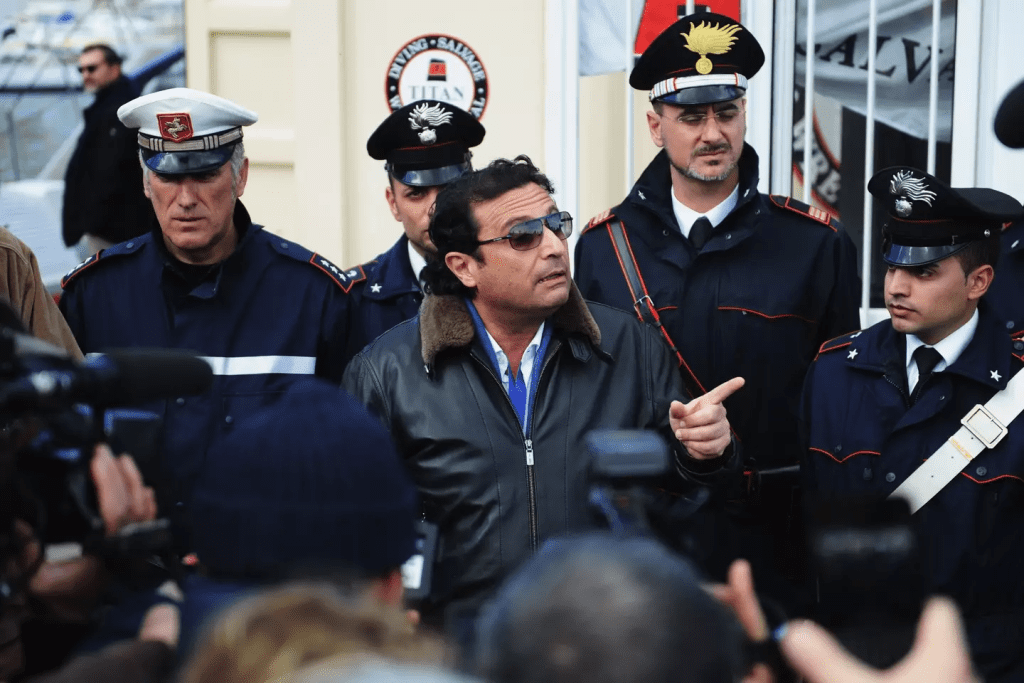
Water flooded into the vessel, and the ship began to tilt, eventually sinking after landing on an underwater ledge. In the chaos that followed, Schettino abandoned the ship, leaving the passengers and crew behind. He later claimed he had accidentally fallen into a lifeboat, but his actions earned him the nickname “Captain Coward.”
Schettino’s decision to sail off course was initially thought to be a reckless mistake, but reports later suggested that his actions may have been motivated by a desire to impress Domnica Cemortan, a 24-year-old Moldovan dancer with whom he was allegedly having an affair. Prosecutors argued that he steered too close to the island to show off to her, but Cemortan denied distracting the captain during the crash, claiming she was far from him at the time.
During his trial, Schettino denied trying to impress Cemortan. Instead, he explained that his motivations were to please the passengers with a special view of the island, to salute a retired captain who lived there, and to fulfill a request from the ship’s head waiter, who was from Giglio. Schettino claimed it was not necessary to inform his employers, Costa Crociere, about the diversion, believing it was simply an “approach” rather than a tourist detour.
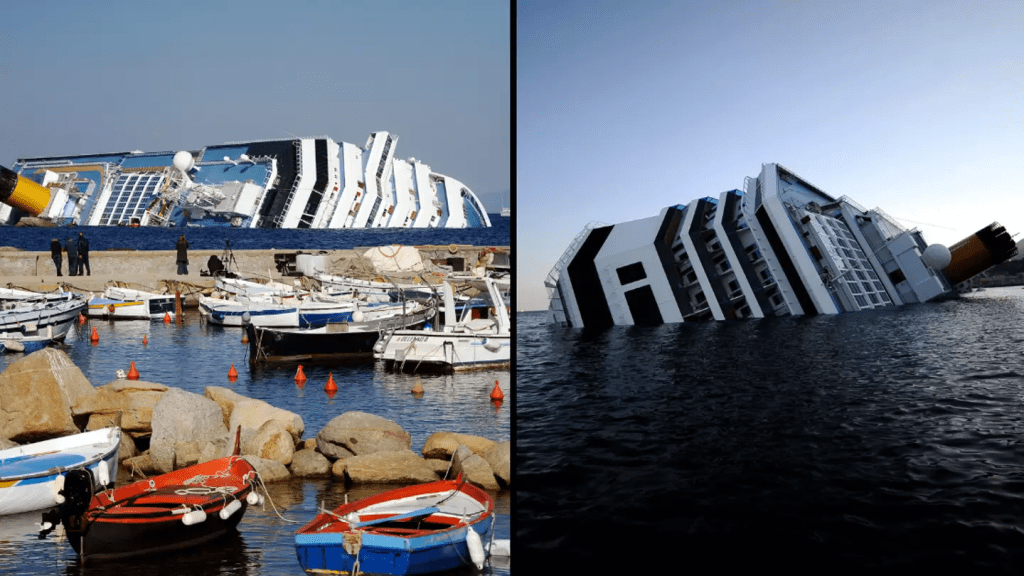
An investigation into the disaster, carried out by Italy’s Ministry of Infrastructures and Transport, concluded that the ship had sailed too close to the shore at night and was traveling at an unsafe speed of 15.5 knots. The crash resulted in the death of 33 passengers and crew members, with the final victim’s body being recovered two years after the incident in 2014.
Schettino, along with other members of his team, was charged with manslaughter and other offenses. The total cost of the Costa Concordia disaster is estimated at around $2 billion. Schettino began serving a 16-year prison sentence in 2017 after exhausting his appeals, and he is currently halfway through his sentence.