Why do your hands wrinkle in water? The curious secret of your body
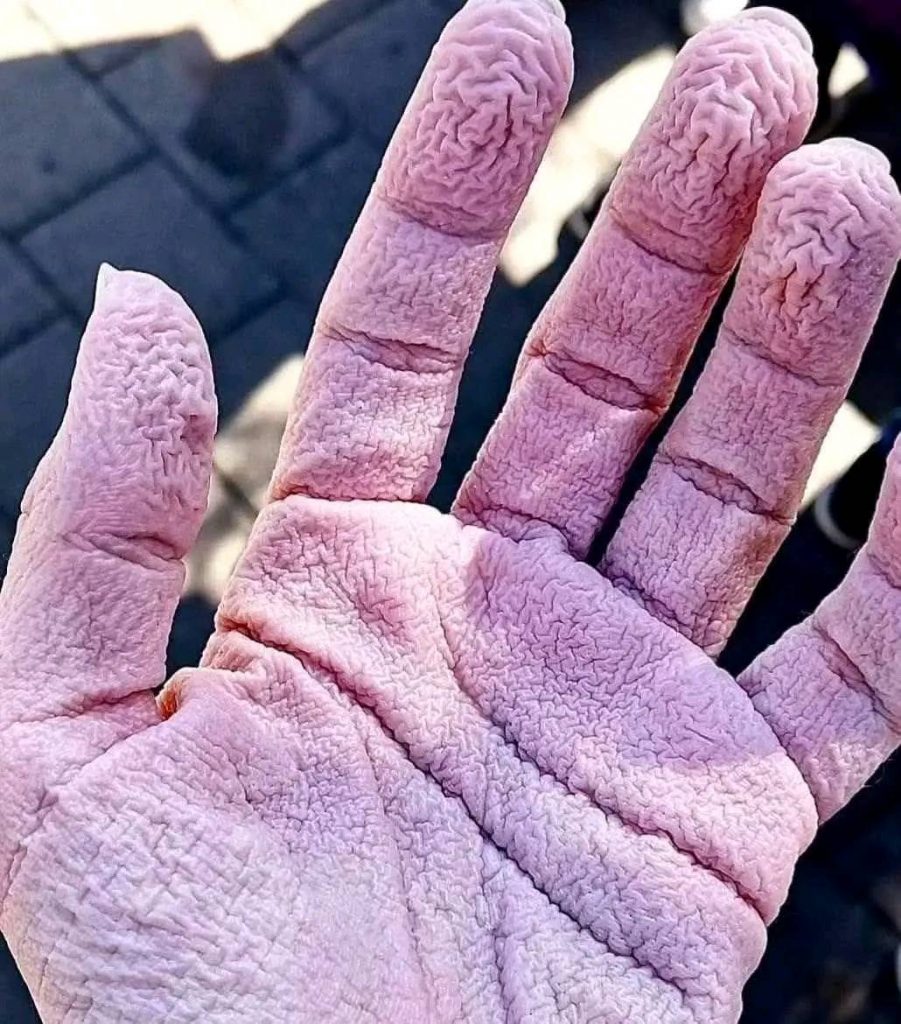
It’s probably happened to you: you’ve been in the shower, tub, or pool for a while, and suddenly you notice your fingers are wrinkled, like a raisin . This phenomenon, although common, has been the subject of scientific curiosity for decades. Why does the skin on our fingers wrinkle after prolonged exposure to water? Is it simply a physical effect, or is there something else behind it?
The ancient belief: water absorption
For many years, the most common explanation was that skin wrinkled because it absorbed water . The epidermis, the outermost layer of skin, swelled with moisture and formed folds. However, this theory was ruled out when scientists noticed that wrinkling doesn’t occur if there is damage to certain nerves in the fingers .
This discovery led to a fascinating new explanation: skin wrinkling is not a passive effect, but an active response of the body, controlled by the nervous system.
The real reason: an evolutionary mechanism
Recent studies have shown that fingers wrinkle underwater because the nervous system tells them to . Specifically, when your hands are submerged for more than a few minutes, the blood vessels beneath the skin constrict, causing the skin to sag and form those typical wrinkles. But why would the body do something like this on purpose?
The answer lies in evolution. Scientists at the Institute of Neuroscience at Newcastle University (UK) discovered that these wrinkles improve grip on wet or slippery surfaces , similar to the grooves on a tire.
In other words, your fingers wrinkle so you can better grip objects underwater , such as stones, branches, or tools. This mechanism is believed to have been useful to our ancestors who gathered food in rivers, ponds, or wetlands. A true natural survival tool!
Does it occur throughout the body?
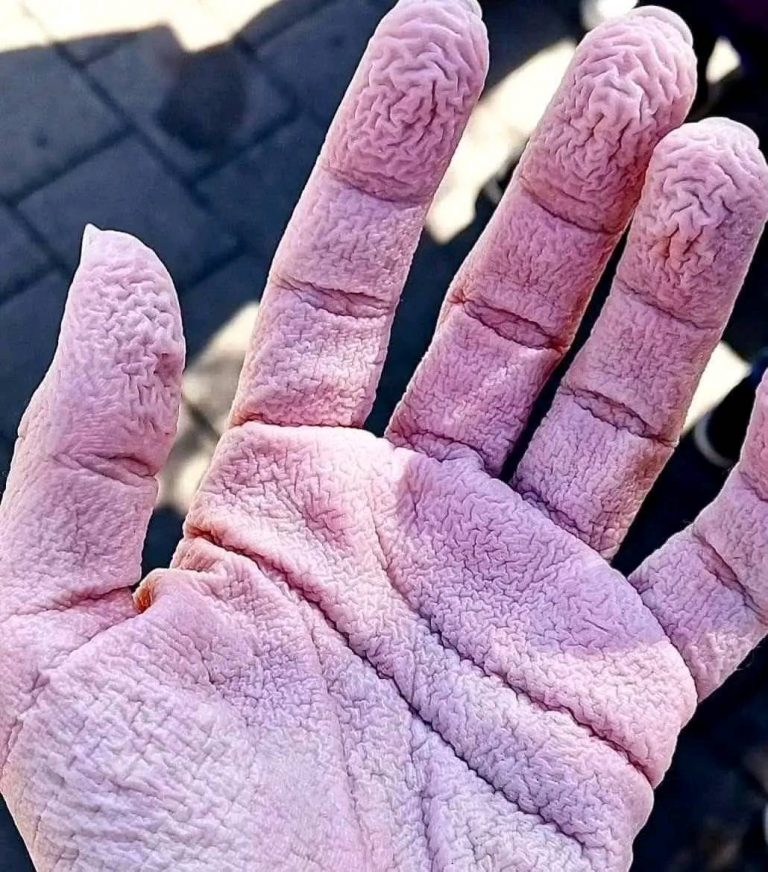
Interestingly, this phenomenon doesn’t occur on all skin on the body. The areas where wrinkles appear most visibly are the palms of the hands and the soles of the feet , as these are the areas most frequently used for handling objects or walking. Furthermore, these areas have thicker skin and lack sebaceous glands, making them more prone to wrinkling.
Should you be worried?
In most cases, temporary water wrinkles are completely harmless and disappear on their own after a few minutes out of the water. However, if you notice your fingers wrinkling without contact with water or experience other symptoms such as extreme dryness, pain, or color changes, it could be a sign of a dermatological or circulatory problem, and you should consult a doctor.
Conclusion
The next time you see your wrinkled fingers after a long soak, don’t think it’s just a body quirk. It’s actually an incredible display of the biological intelligence with which we were designed . Your body, without you even realizing it, adapts to help you have a better grip in wet conditions. A small detail with a big evolutionary purpose.