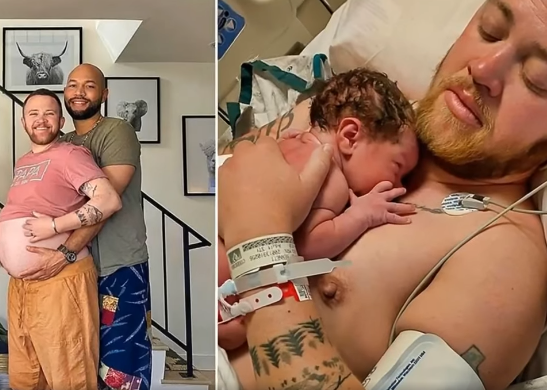
Using a person’s preferred name and pronouns is a basic form of respect; however, societal gender norms often lead to errors, especially in medical settings. This was a deeply personal issue for Bennett Kaspar-Williams , a 37-year-old transgender man who gave birth to his son Hudson via cesarean section in October 2020. Despite clearly identifying as male and using he/his pronouns, hospital staff repeatedly referred to him as “mother,” causing him great emotional distress during an already vulnerable time.
Kaspar-Williams began her gender transition in 2014, after coming out as trans in 2011. Although she underwent breast augmentation surgery, she chose to keep her genitals intact, which allowed her to carry a pregnancy to term. While having a child brought her immense joy, the constant gender deviance she experienced during pregnancy and childbirth made the experience much more difficult. Even with male gender markers on medical forms, staff default assumptions remained rooted in the traditional idea that only women give birth.
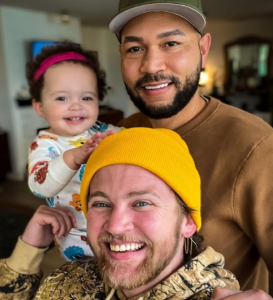
Since becoming a father, Kaspar-Williams has spoken about the need to decouple childbirth from gender identity. He emphasizes that not everyone who gives birth is a woman, and not all women can or choose to have children. He explained that his dysphoria during pregnancy stemmed solely from being labeled a “mother,” a role with which he never identified. For him, the decision to become pregnant only made sense when he was able to mentally separate the physical act of childbirth from societal expectations of femininity.
His story resonates with that of Freddy McConnell , another trans man who gave birth in 2019 and was featured in a documentary. McConnell—who struggled with gender dysphoria since childhood—said that transitioning allowed him to fully enjoy life. When he decided to have a baby to maintain a biological connection, he viewed it pragmatically, stating that he used his body’s capabilities to achieve a goal. Unlike Kaspar-Williams, McConnell reported that the hospital staff were respectful and empathetic, which made his birthing experience powerful and affirming.